By
Brian Ladrido - Program Manager, NET+ Cloud Services
Estimated reading time: 7 minutes
This conversation didn’t end at TechEX25!
Private wireless and neutral-host networks are becoming practical tools for closing campus coverage gaps, supporting research mobility, and meeting connectivity needs. Find out what surfaced at TechEX25—and tune in to KAIROS Pulse on March 12 to gain further insight on the topic—knowledge that could impact your institution.
KAIROS Pulse
The future of campus connectivity took center stage at the 2025 Internet2 Technology Exchange (TechEX25) in Denver, where higher education IT leaders gathered to explore how private wireless and neutral host technologies are transforming research and education environments.
Two packed events — a comprehensive tutorial and an engaging panel discussion — demonstrated the growing momentum behind these emerging solutions and their potential to reshape how institutions approach wireless infrastructure. Both activities took place on Mobility Day, an annual event supported by the Global eduroam Governance Committee covering topics like eduroam, govroam, mobile networks, and a host of mobility related topics.
Moving Beyond Traditional WiFi
Ashish Jain, CEO of KAIROS Pulse and co-founder of Private Wireless PRO, led the half-day tutorial “Rethinking Campus Connectivity for Higher Education IT Leaders.” The session drew CIOs, CTOs, and network architects for an intensive exploration of advanced wireless solutions.
The tutorial featured contributions from:
- Jonathan Polly, technical manager of the 5G Innovation Lab at Cal Poly San Luis Obispo
- Mark Houtz, regional IT director for the Northeastern Utah Educational Services (NUES)
- and Jamaal Smith, vice president of Sales and Business Development from Kajeet
The session challenged participants to view wireless infrastructure as a strategic foundation rather than a commodity service.
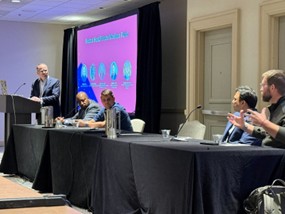 The panel from “Rethinking Campus Connectivity for Higher Education IT Leaders” at the 2025 Internet2 Technology Exchange. From left to right: Dustin Debrum, Jamaal Smith, Mark Houtz, Ashish Jain, Jonathan Polly
“We’re asking IT leaders to fundamentally shift how they think about wireless,” explained Jain. “It’s not just about providing connectivity anymore — it’s about creating a programmable, secure infrastructure that can enable research innovation, enhance campus safety, and even generate new revenue streams.”
The tutorial covered three critical areas where private wireless technologies are making an impact:
1. Solving the Cellular Coverage Challenge
Neutral host solutions emerged as a game-changing alternative to expensive Distributed Antenna Systems (DAS). By leveraging CBRS spectrum, institutions can deploy cost-effective infrastructure that serves all major carriers without the complexity and expense of traditional approaches.
Case studies from peer institutions highlighted quantifiable benefits in coverage improvements, cost savings, and enhanced campus safety.
Polly shared how Cal Poly leveraged private cellular to emulate a digital twin for network planning. That approach helped its construction management office build highly detailed geospatial models to support optimized network design.
Houtz highlighted the Cellular on Wheels (COW) implementation at the Utah Education Telehealth Network (UETN). COW marked a shift from fixed infrastructure to mobile deployments, extending UETN’s proven private cellular capability to temporary and emergency situations.
2. Building Private 5G Innovation Hubs
The discussion of programmable Private 5G networks resonated strongly with research-focused institutions. These networks enable advanced capabilities such as network slicing and edge computing, opening doors to securing research grants, developing workforce training programs, and establishing industry partnerships.
At universities like Cal Poly, 5G Innovation Labs are becoming critical assets for both academic research and external collaboration. Polly talked about how the university extended network coverage to its remote 3,200-acre Swanton Pacific Ranch to support a living laboratory. Cal Poly also strengthened connectivity and security at its Pier Marine Research Facility to support coastal research and innovation.
UETN’s COW implementation focused on support of educational use cases. The implementation enables mobile connectivity for remote learning, backup connectivity when infrastructure fails, and helps extend high-speed networks to underconnected students in rural areas. It also enhanced school and campus security by connecting parking lot cameras and other Internet of Things (IoT) devices.
3. Demystifying Deployment with AI Tools
Houtz introduced attendees to AI-powered network planning tools that are dramatically simplifying private cellular deployment.
These tools optimize antenna placement, manage signal propagation, and reduce deployment risks, addressing one of the biggest concerns for IT leaders when adopting new wireless technologies.
Mobility Day Discussion
Following the tutorial, the Mobility Day panel brought together practitioners from across the community to discuss real-world implementation experiences.
Dustin DeBrum, manager of enterprise application services at Cal Poly San Luis Obispo, moderated the discussion. The panel discussion featured perspectives on campus deployments, neutral host implementations, and service delivery partners.
Panelists tackled pressing questions about network maturity, spectrum options beyond CBRS, and how neutral host solutions integrate with both private cellular and public carrier services.
The conversation highlighted a consistent theme: private wireless technologies have matured significantly and are ready for production deployment at scale.
Unified Architecture: Bringing it All Together
A key technical highlight emerged around the Internet2 Future Wireless Working Group’s vision for a unified wireless architecture that addresses the need for private-to-private roaming with Private 5G cellular networks.
Similar to eduroam for Wi-Fi, this approach leverages SIM-based authentication bound to InCommon federated identities. This approach also enables researchers to move between different wireless technologies and institutions while maintaining secure, continuous connectivity.
The architecture supports innovative use cases, such as remote field research, where edge computing maintains full functionality even during backhaul outages. This can be critical for institutions with distributed research facilities or agricultural operations.
The Conversation Continues
The enthusiasm for private wireless didn’t end with the formal sessions. More than 40 attendees joined the Future Wireless Working Group’s Birds of a Feather lunch at TechEX25 on Dec. 9, 2025, to continue discussions on campus wireless strategies, deployment challenges, and emerging use cases.
“This is exactly the kind of peer-to-peer sharing our community needs,” said Polly. “We’re all navigating similar questions about WiFi 7, private 5G, and hybrid approaches. Having this informal space to share experiences and lessons learned is invaluable.”
Looking Ahead
The strong attendance and engagement at both events signaled growing institutional interest in private wireless solutions. As campuses grapple with expanding connectivity demands — from IoT deployments to advanced research applications— these technologies offer compelling alternatives to traditional approaches.
For institutions considering private wireless deployments, the key takeaway from TechEX25 is that the technology is mature, the use cases are compelling, and a growing community of peers is ready to share their experiences.
Whether addressing coverage gaps, enabling research innovation, or building toward the next generation of campus connectivity, private wireless and neutral host solutions are moving from experimental to strategic.
The Future Wireless Working Group is transitioning to become the Advanced Wireless Community of Practice, continuing its role as the community hub for advanced wireless discussions and collaboration.
Institutions interested in learning more or sharing their deployment experiences are invited to email awcop@internet2.edu.

Tune in on March 12, 2026
On March 12, 2026, Internet2 and Kajeet will join Ashish Jain on ALyNMENT Connect the Dots, a podcast that bridges the gap between technology and business value.
This upcoming episode will explore advanced wireless networking technologies and their implications for higher education use cases.
Listen in for an opportunity to:
- Break down what private 5G and neutral host architectures really mean for your campus.
- Explore real-world use cases that go far beyond “faster internet.”
- Learn how institutions can leverage CBRS spectrum and shared infrastructure models to modernize their networks without breaking the bank.
Find the episode here on Kairos Pulse.
Featured Speakers:
 Ashish Jain, CEO of KAIROS Pulse and Co-founder of Private Wireless PRO
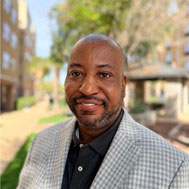 Jamaal Smith, Vice President of Sales and Business Development at Kajeet
 Brian Ladrido, NET+ Program Manager, Cloud Services at Internet2
About the Author(s)
Brian Ladrido is a Program Manager on the NET+ team at Internet2, where he leads UCaaS programs tailored for the higher education and research community and chairs the Internet 2 Future Wireless Working Group. Brian holds an MPS degree in Enterprise Architecture degree from Penn State University and has over two decades of experience in Information Technology, serving previous roles in higher education, private sector organizations, and as an independent consultant.
Check out Brian's LinkedIn Profile.