Program chairs and committees intentionally curated each track to address timely conversations across higher education’s landscape.
Ahead of TechEX26, Internet2 interviewed Heather Mitchell, director of cloud services at Vanderbilt University and TechEX26 Program Committee chair, to gain insight into the Cloud Technology track, this year’s featured sessions, and conversations conference-goers can expect to have in Minneapolis.
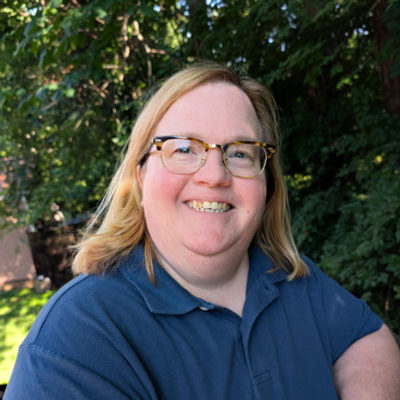
Meet Heather Mitchell
Director of Cloud Services at Vanderbilt University
How long have you been involved in the R&E community?
27 years
Fun fact about you:
I was once one of eight certified Master Technicians in the U.S. for the Ericsson MD110 PBX system.
What points of interest in Minneapolis would you recommend to TechEX26 attendees?
Like art? Start at the Walker. Wander the sculpture garden, then cross the footbridge over the highway into Loring Park to check out the gardens.
Asian food? Try Gai Noi, Diane’s Place, or Vinai.
Like fish? Try Sea Salt, which has lovely music and outdoor seating.
Like Jazz? The Dakota is a great jazz club. The food is good there too.
What’s a difficult problem or pressure point you’re hearing about from peers across the R&E community right now, and how does the Cloud Technology track address it?
We hear a fair amount from institutions about meeting the growing demand for cloud resources without having additional staff. We’ll have several presentations on ways people have leveraged infrastructure as code, pipelines, containers and container orchestration, and, of course, AI to orchestrate and automate workloads at scale.
Who is actually in the room in your track, and how does that set the Internet2 Technology Exchange apart from other conferences?
One of the best parts of the Internet2 Technology Exchange is the community! Our track includes people who have been active in the cloud and R&E since the cloud began, as well as those just getting started.
We all face similar challenges unique to the R&E community, and everyone is eager to share their unvarnished experience and perspective on what actually works in our space. This includes our vendor participants, whose track participation is always focused on specific, practical information and solutions deeply grounded in a genuine commitment to the R&E community. They come to learn from us and advocate for us!
Featured Sessions:
- From Code to Colleagues: Observability for Autonomous Agents | Tuesday, Oct. 27 from 1:40 p.m. – 2:30 p.m.
- From Exploration to Implementation: Early Patterns for AI Adoption in Cloud-Based Research Environments | Thursday, Oct. 29 from 2:40 p.m. – 3:30 p.m.
What’s a session or topic in your track this year that you think will surprise people, and what’s the conversation you’re most looking forward to having at the Internet2 Technology Exchange?
One session I’m really looking forward to is Andrew Ragusa’s session from the GlobalNOC at Indiana University. A service provider like the GlobalNOC needs to be highly available, resilient, and reliable to deliver value to its customers. So I’m curious about how they tackled risks – both real and perceived – migrating from a proven, familiar architecture to one with a bit of a learning curve and with plenty of fear, uncertainty, and doubt around it. What did they prioritize? How did they skill up their teams? How did they change minds and conversations to get it done?
I’m also looking forward to talking about how changes in AI pricing and hardware pricing are affecting decisions about where to place workloads and what to buy versus build.
As for surprises, you might expect a session about a network operations center to be in the networking track, but “cloudy” tools and approaches like Kubernetes can improve all kinds of IT operations.
Featured Sessions:
- Reimagining the Build vs. Buy Calculus in the Age of AI | Tuesday, Oct. 27 from 11:20 a.m. – 12:10 p.m.
- Migrating the GlobalNOC Tools stack to Kubernetes | Wednesday, Oct. 28 from 9 a.m. – 9:50 a.m.
Don’t Forget to Unconference
Maximize your learning by creating an agenda exclusive to you and your peers. Attend Peer-to-Peer: the Advanced Networking Unconference or Advance CAMP (ACAMP), an identity and access management favorite.
Unsure of how an unconference works? Browse this guide to see when our unconferences begin, how to prepare, and who should be in the room.
New to TechEX?
Check out our first-timers’ guide. It is a comprehensive resource filled with tips, events, and helpful ways to connect with others in R&E before and during the event.